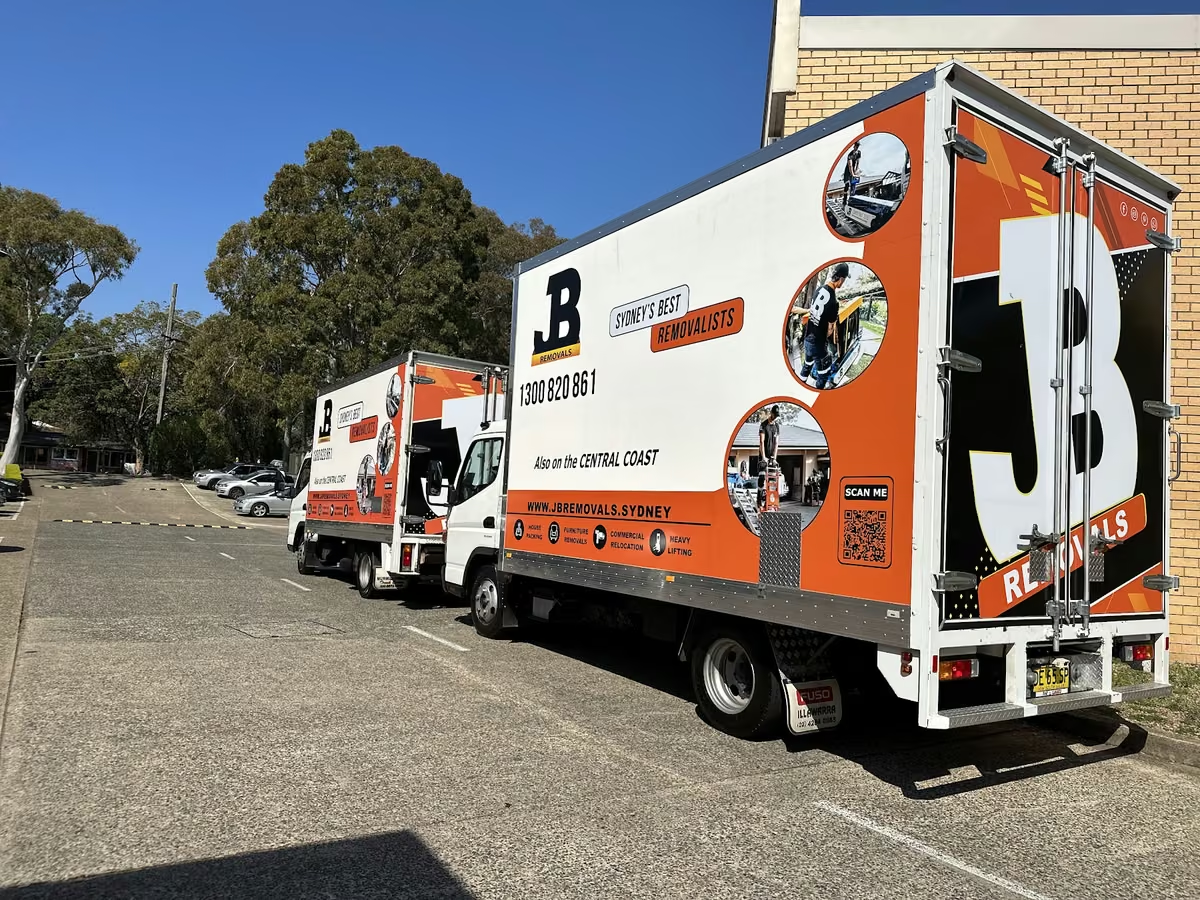
JB Removals plans the physical relocation around the declared items, both sites and the required operational sequence. Crew, vehicles and specialist responsibilities are confirmed from the verified scope.
Share your inventory, operating window, loading access and specialist equipment requirements. The commercial planner helps JB assess a staged move around your business.
Warehouse removalists in Sydney, planned around your operations
Warehouse removalists need a clear picture of your inventory, access and business operations. A Sydney warehouse relocation can bring together stock, racking areas, office contents, handling equipment and loading docks across several stages. For a wider premises move, include these details in your commercial relocation plan.
JB plans the physical move around the declared items and both sites. We separate transport and handling from work assigned to installers, licensed trades or specialist contractors. Share the information you have now; a site review may be needed where photographs and inventory cannot establish the scope.
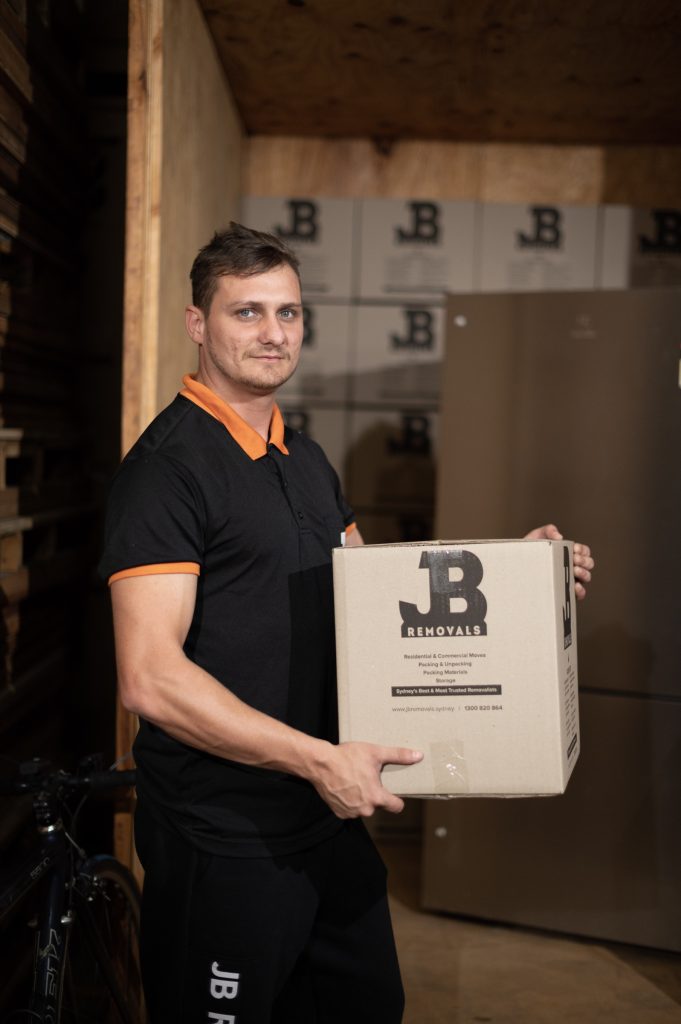
The JB team, ready to help plan packing, handling and transport.
Define what is moving
Inventory management for your warehouse move
List quantities, dimensions and weights where available. Keep ordinary contents and separately assessed equipment clearly identified. Use one inventory with an item or pallet reference, collection zone, destination zone and handling notes. Update it when stock or the moving scope changes.
Stock, pallets & loose goods
Group stock by zone and destination. Record stock codes, quantities, pallet sizes and approximate weights in one inventory. Label each load to match its reference and receiving zone. Agree who checks stock at collection and delivery, and record discrepancies with the handover contact.
Itemise desks, chairs, cabinets, records and staff-area contents separately from warehouse stock. Include dismantling and destination placement where required.
List shelving or racking components already prepared for transport, along with benches, cabinets and fixtures. Confirm who will dismantle, inspect and reinstall each system.
Share dimensions, weight, manufacturer information and lifting points or centre-of-gravity details where known. Each machine and its full access route need an individual assessment.
Identify glass, delicate finishes, awkward shapes and bulky components. Include photographs, orientation restrictions and any special packing or protection requirements.
Separate items going to a new warehouse, another branch or storage. Mark what needs to arrive first and check storage suitability for the actual contents.
Identify hazardous, controlled or temperature-sensitive goods early. These need to be excluded or managed under your approved specialist arrangements; ordinary moving or storage services should not be assumed suitable.
Sequence before speed
A warehouse moving plan from collection to placement
Keep dispatch needs, site access and the order of delivery in the same plan.
01 / INVENTORY & CONTACTS
Map the inventory by zone
Appoint a contact at each site, define operational constraints and prepare an itemised inventory. Group stock, warehouse equipment and office contents by destination. Mark dispatch-critical stock and items needed first. Agree who records quantities at collection and checks them at delivery, so both teams work from the same inventory.
02 / ACCESS & RESOURCES
Review the complete moving route
Check docks, vehicle clearances, loading limits, doorways, floor transitions and final placement. Mark receiving zones on the destination layout and check that each item can reach its intended position. Keep equipment preparation and installation responsibilities separate from physical transport. See heavy and specialist removals for equipment and restricted-access assessment.
03 / STAGING & HANDOVER
Confirm the sequence before moving day
Agree resources, access windows, labels, the written scope and contractor responsibilities. Stage work by zone or operational priority and confirm when each area is ready to release. Identify any dispatch or receiving work continuing during the move. Include packing and labelling support where required, then reconfirm changes with the handover contact before the crew arrives.
Prepare both sites
Warehouse access and additional services
Your site team coordinates site safety and operational controls. Record the agreed access, inductions and responsibilities of JB and other contractors in the moving scope.
Site & dock assessment
Send loading-dock locations, vehicle clearances, access hours, security requirements, inductions and site loading limits. Show pedestrian routes, ramps, gradients, internal doors and the final position of large items. A site inspection can be assessed where the route needs a closer review.
Agree who packs and labels stock, how cartons are grouped and which packing materials suit fragile items. Keep labels visible after wrapping. Separate stock needed for ongoing orders from items ready to move, and keep confidential records under your organisation’s control.
Match the vehicle and loading arrangements to the inventory, docks and manoeuvring space. Include carrying distances and any limits supplied by the site.
Allocate isolation, disconnection, decommissioning, lifting certification, transport engineering and recommissioning before collection. These tasks require a stated scope and may need specialist providers.
Send the weight, dimensions and route photographs for machinery or other heavy items. Stair-climbing equipment is assessed against the actual load, staircase, landings and available operating space.
Stage the warehouse move by zone, stock group or operational priority. Set aside the items needed first at the receiving site and confirm the delivery order. EasyBox may suit furniture, cartons and other suitable contents; confirm storage suitability, access and handling in the quote.
What affects the cost of warehouse removals in Sydney?
Compare warehouse removalists using the same inventory, access details and moving sequence. Check crew and vehicle time, packing, storage, travel and any separately assessed machinery work in each written quote. Warehouse floor area alone does not describe the work involved.
Inventory & handling
The number, size and weight of items influence the crew, vehicles, protection and equipment. Identify machinery and awkward items before comparing quotes.
Include packing, labelling, temporary storage, redelivery and any third-party work explicitly. Ask how changes to the inventory or sequence will be priced.
Open a question for practical planning details. Your written moving scope confirms the work included.
Can JB move machinery?
Potentially, after an assessment of the item and the complete access route. Share weight, dimensions, manufacturer information and photographs. Suitable equipment, specialist responsibilities and the included handling work must be confirmed in writing. See our heavy and specialist moving services.
Can the move be staged around warehouse operations?
A staged move can be planned when zones, access windows and operational priorities are clearly defined. Identify what must remain accessible for dispatch or staff, what moves first and when each area can be handed over. Confirm the agreed sequence and resource availability before booking.
Does JB dismantle warehouse racking?
Do not assume racking dismantling or installation is included. Identify the racking system and confirm who will dismantle, prepare, inspect and reinstall it. Those responsibilities must be stated in the written quote and may require specialist providers.
Can warehouse stock be packed or labelled?
Packing and labelling can be assessed as part of the move. Your organisation should define stock controls, quantities, destination labels and handover responsibilities. Agree what staff will prepare and include any requested professional packing in the scope.
What site information is required?
Provide pickup and delivery addresses, loading docks, vehicle clearances, loading limits supplied by the site, access hours, security and induction requirements. Add photographs of ramps, stairs, doors, floor transitions and the full route, plus the destination layout and final positions of large items.
Can office contents move with the warehouse?
Yes, where included in the agreed scope. Keep office furniture, cartons, records and equipment separately itemised from warehouse stock. Coordinate IT preparation with your nominated provider and label each item for the new layout. See office movers in Sydney for workplace planning.
Can JB store items between warehouse locations?
Discuss the gap between collection and delivery and identify anything you need to access. EasyBox mobile storage may suit furniture, cartons and other suitable contents. Confirm suitability, handling, access, redelivery and charges; storage is not suitable for every stock or equipment type.
What do you need to prepare a warehouse relocation quote?
Start with both addresses, an inventory by zone, preferred dates, operating requirements and access photographs. Add layout information and details for each machine or heavy item. Tell JB what is still unknown; technical details and files can be supplied later, and a site review may be needed to confirm the final scope.
More ways JB can help
Related moving services in Sydney
Office & commercial
Coordinate workplaces, equipment and broader business relocations within an agreed moving scope.